Let’s clear something up first.
Damascus hair shears are not magic.
They don’t cut hair for you.
They don’t turn beginners into masters.
What they do offer is control.
Consistency.
And a very specific cutting feel that experienced hands notice instantly.
If you’ve ever wondered why Damascus shears cost more, feel different, or get talked about like some secret club—this page is for you.
No hype.
No shortcuts.
Just real information.
What Exactly Are Damascus Hair Shears?
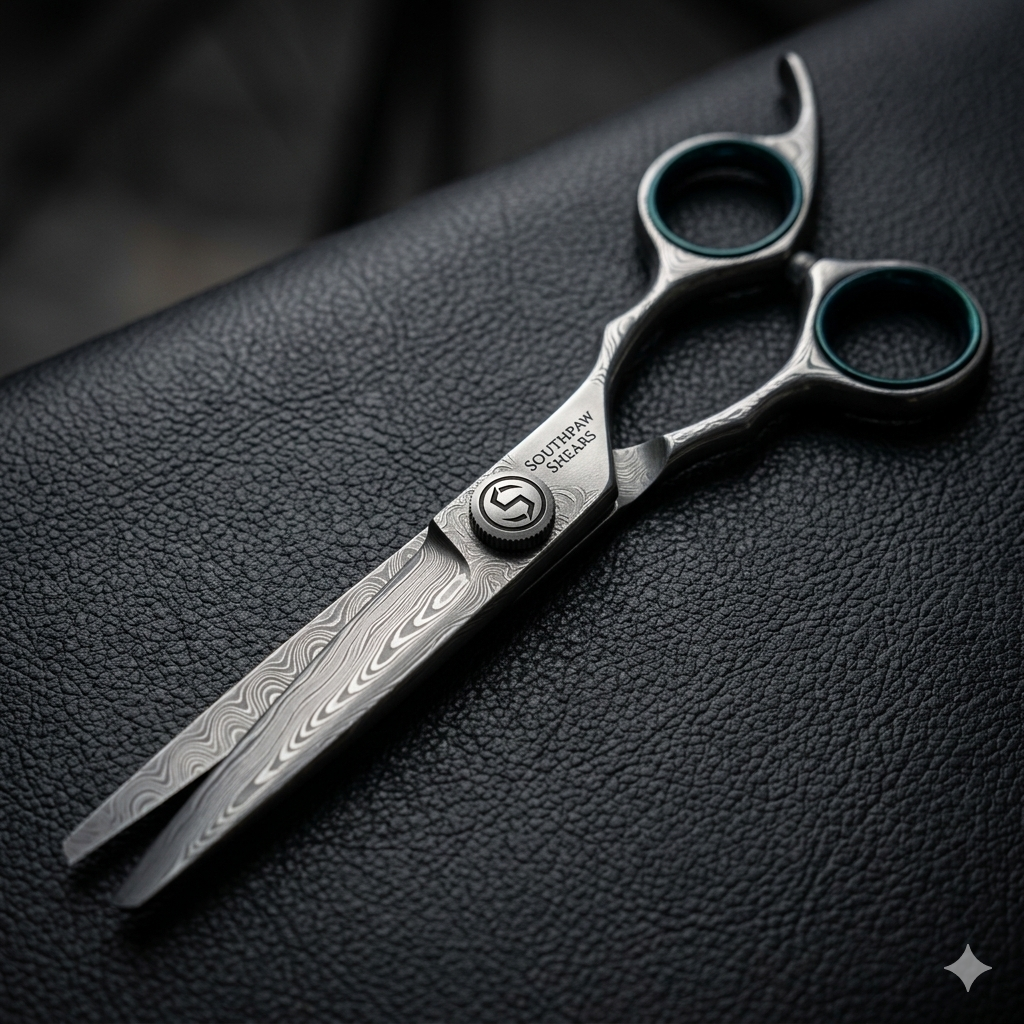
Damascus hair shears are made from multiple layers of steel forged together into a single blade.
Not coated.
Not etched for looks.
Forged under heat and pressure.
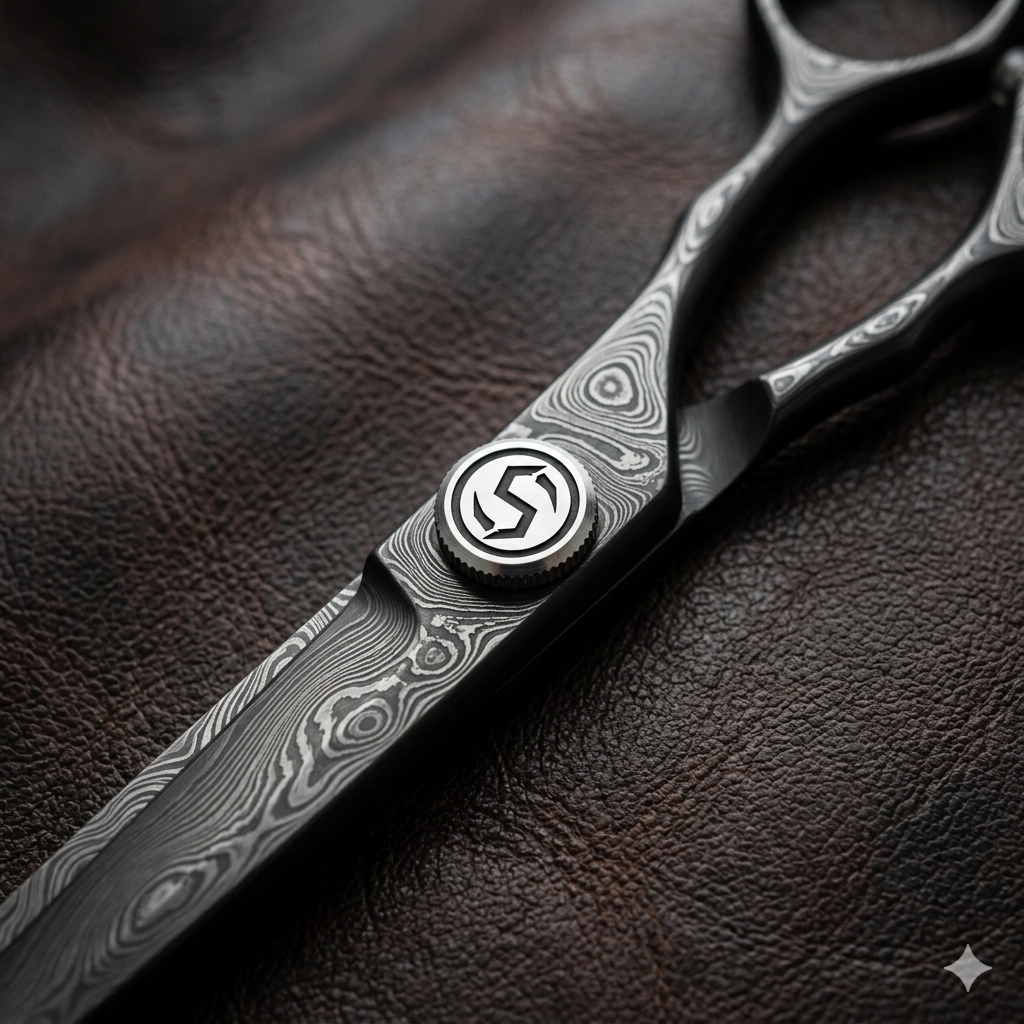
Those wave-like patterns you see on the blade?
They are the result of layered steel.
They are not decoration.
Each layer has a job.
Some layers add hardness.
Others add flexibility.
Together, they create a blade that behaves differently from standard single-steel shears.
That difference shows up during real work.
Not in a display case.
A Quick Truth About Damascus Steel
Historically, Damascus steel was developed for weapons.
Why?
Because blades needed to be sharp and survive impact.
Hair cutting obviously isn’t sword fighting.
But the same principle applies.
Hair shears face:
- Constant opening and closing
- Micro pressure at the edge
- Long daily sessions
Damascus steel was never about beauty.
It was about balance.
That’s why it found its way into professional tools.
Why Professionals Care About Damascus Shears
If you cut hair all day, small things matter.
Tiny vibrations.
Micro resistance.
Edge drag.
These things don’t show up in a quick test cut.
They show up after six hours.
Damascus shears are designed to reduce those issues.
They feel calmer.
More stable.
More predictable.
That’s why professionals notice them more than beginners.
Raw Materials Used in Damascus Hair Shears
Every Damascus shear begins as flat steel bars.
Not finished blades.
Raw material.
Multiple steels are selected carefully.
Usually:
- A high-carbon steel for sharpness
- A tougher steel for durability
Before forging begins, the steels are:
- Cleaned
- Stacked
- Aligned
If this step is sloppy, the blade will never be right.
Good Damascus starts before the fire.
The Damascus Forging Process (In Simple Words)
Once stacked, the steel is heated.
Not melted.
Heated until it can be shaped.
The stack is pressed together until the layers fuse.
Then it’s folded.
Reheated.
Pressed again.
Each fold increases the number of layers.
This process repeats many times.
More folds mean:
- Stronger internal bonding
- Better stress distribution
- A more stable blade
This is slow work.
There is no fast way to do real Damascus.
Why Damascus Shears Cannot Be Mass-Produced Cheaply
Stamped shears are fast.
Laser-cut shears are fast.
Drop-shipped shears are fast.
Damascus is not.
Each forging cycle takes time.
Each temperature shift must be precise.
Rushing causes:
- Weak layer bonding
- Uneven hardness
- Structural failure over time
That’s why true Damascus shears are always limited in volume.
They cost more because they require patience.
From Billet to Blade: Shaping Damascus Shears
After forging, the steel billet is shaped into blades.
This stage defines:
- Length
- Thickness
- Weight balance
Grinding Damascus steel is tricky.
Too much heat ruins the steel.
Too much pressure causes micro cracks.
Experienced makers grind slowly and evenly.
Precision matters more than speed.
Heat Treatment: Where Damascus Performance Is Locked In
Heat treatment is not optional.
It is critical.
The blade is reheated and cooled under controlled conditions.
This sets:
- Final hardness
- Flexibility
- Edge stability
Because Damascus contains different steels, heat treatment must be extremely controlled.
This step separates serious tools from pretty failures.
Hardness vs Flexibility: The Damascus Balance
Hard steel holds an edge.
But it chips easily.
Soft steel absorbs shock.
But dulls faster.
Damascus blends the two.
A good Damascus shear:
- Stays sharp longer
- Resists chipping
- Handles pressure gracefully
This balance matters during long cutting sessions.
Edge Geometry in Damascus Hair Shears
Most Damascus hair shears use a convex edge.
Why?
Because layered steel supports thinner edges better.
Convex edges:
- Cut cleaner
- Require less force
- Glide through hair
This edge type is demanding to maintain, but extremely rewarding in use.
Why Damascus Shears Feel “Smoother”
Many professionals describe Damascus shears as smooth or quiet.
That’s not imagination.
Layered steel absorbs micro vibration.
Less vibration means:
- Less hand fatigue
- More control
- Better finishing work
It’s subtle.
But once you feel it, you notice when it’s gone.
Weight and Balance: A Hidden Advantage
Damascus steel is dense.
But good Damascus shears are not heavy.
Balance is engineered during shaping.
Material is removed where needed.
Weight is distributed intentionally.
This reduces wrist strain over time.
Damascus Patterns: What They Actually Mean
Those flowing patterns aren’t just pretty.
They reveal forging quality.
Clear, consistent patterns usually mean:
- Proper layer fusion
- Even forging
- Stable internal structure
Messy patterns often indicate shortcuts.
The blade shows the truth.
Are Damascus Hair Shears More Durable?
They are not indestructible.
No professional shear is.
But Damascus shears handle stress better.
They resist:
- Micro chipping
- Edge collapse
- Early dulling
That makes them reliable for daily use.
Sharpening Damascus Hair Shears
Yes, Damascus shears can be sharpened.
They should be sharpened correctly.
Convex edges require experience.
Layered steel requires consistency.
When done properly, Damascus shears return to peak performance easily.
They don’t fight the sharpener.
Maintenance: What Damascus Shears Actually Need
Damascus shears are not fragile.
They are precision tools.
Basic care:
- Wipe after use
- Light oil occasionally
- Dry storage
Avoid moisture.
Avoid drops.
That’s it.
No rituals required.
Who Should Use Damascus Hair Shears?
Damascus shears are best for:
- Full-time professionals
- Precision cutters
- Stylists who value feel
They reward good technique.
Beginners may not notice the difference immediately.
Professionals almost always do.
Damascus Shears vs 440C Shears
440C shears are excellent.
They are consistent and reliable.
Damascus shears add refinement.
The difference isn’t just sharpness.
It’s:
- Smoother cuts
- Better edge stability
- Reduced fatigue
Damascus is about experience, not numbers.
Are Damascus Hair Shears Worth It?
If cutting hair is your career, they often are.
They don’t make you better overnight.
They make long days easier.
That’s the real value.
Common Myths About Damascus Hair Shears
“They’re just for looks.”
No. Real Damascus patterns come from forging, not paint.
“They’re fragile.”
No. Poorly made ones are. Good ones are stable.
“They’re overkill.”
Only if you don’t cut often.
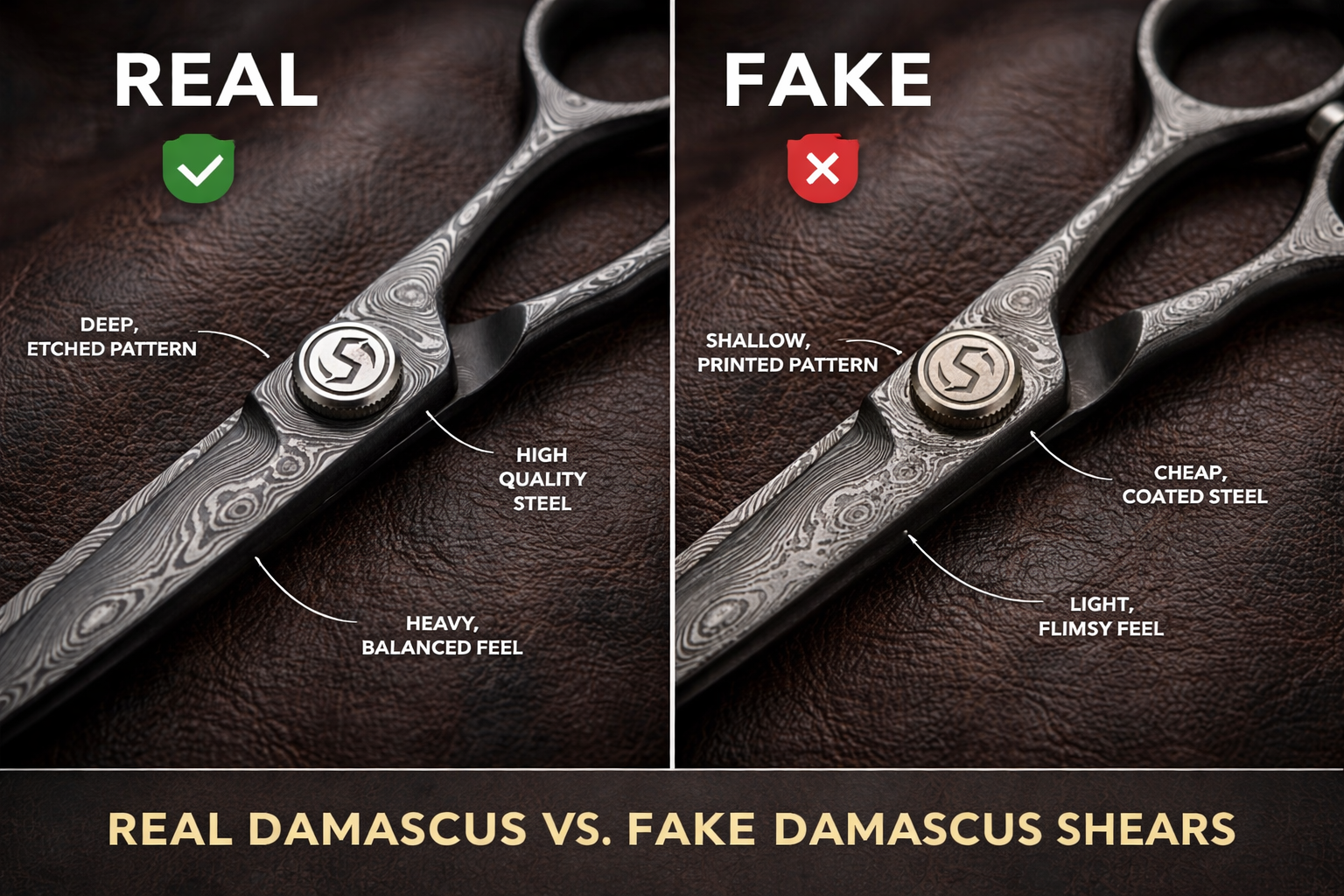
How to Spot Real Damascus Shears
Look for:
- Natural flowing patterns
- Clear steel layering
- Reputable manufacturing details
Avoid:
- Acid-etched patterns only
- Vague steel descriptions
- No explanation of process
If the brand can’t explain the steel, walk away.
Final Thoughts: What Damascus Shears Really Represent
Damascus shears are not about showing off.
They are about respect for process.
Layer by layer.
Heat by heat.
Step by step.
They exist for professionals who care about how tools behave after hundreds of cuts.
If that sounds like you, Damascus shears make sense.
If not, that’s okay too.
Good tools should match the user.